What to know before you start with clear aligners
How do clear aligners work, how long do you wear them, how do you keep them clean and what should you watch out for? Everything you need to know before you begin.
7 min read
What clear aligners are
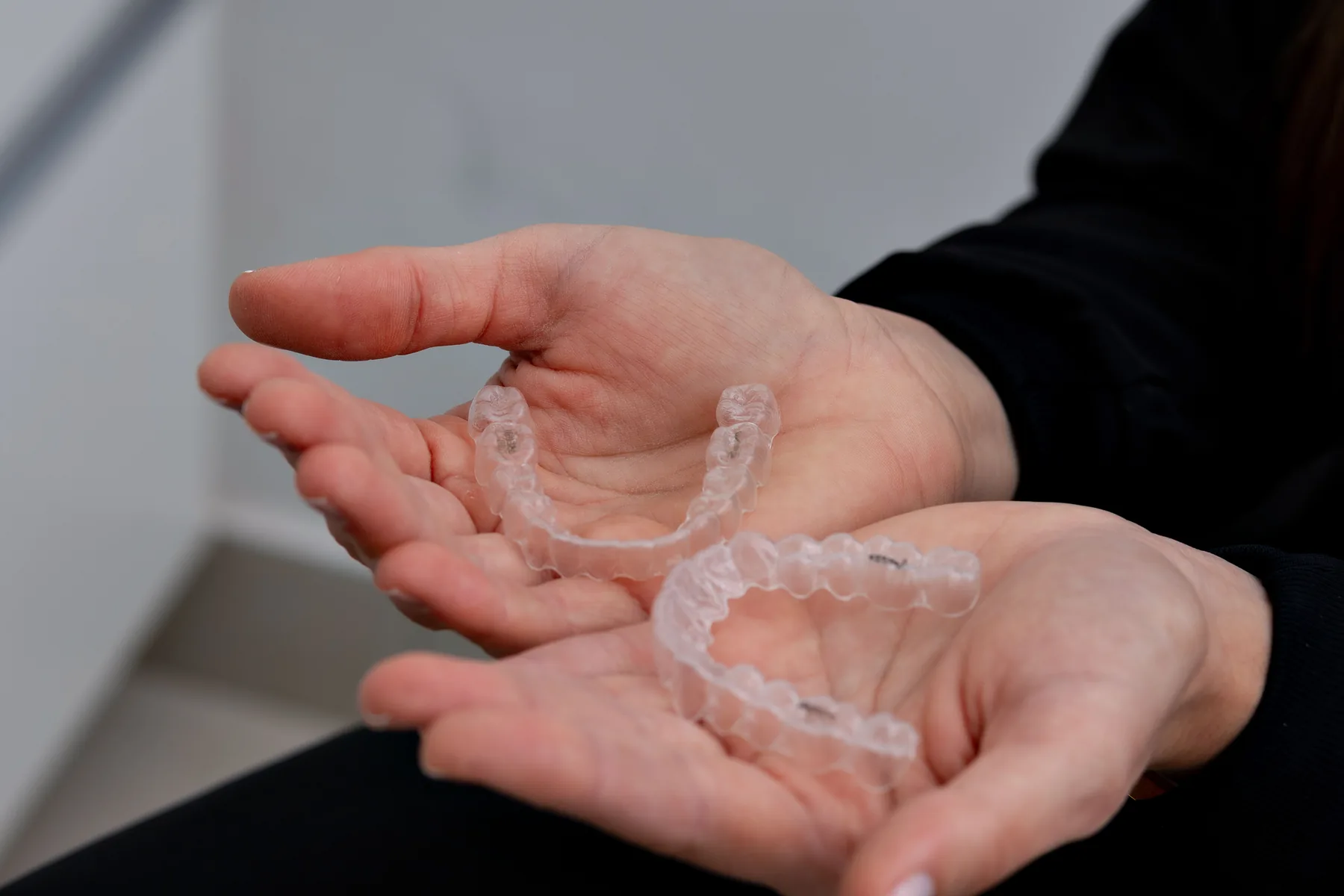
Clear aligners are transparent, removable braces that shift your teeth step by step into the right position. They are made to measure from a digital scan of your teeth, and you get a series of sets that you wear one after the other.
Each set differs slightly from the previous one. That small difference puts gentle pressure on your teeth, moving them gradually. After one to two weeks you move on to the next set, and that way your teeth shift bit by bit towards the end result.
Unlike fixed braces, there are no brackets or wires on your teeth. You take the aligners out yourself when you eat or brush.
How the treatment runs
Step 1: the scan. Your dentist or orthodontist discusses what you want to achieve and makes a digital 3D scan of your teeth. That is painless and no impression paste is involved.
Step 2: the treatment plan. Based on that scan, a plan is worked out by an orthodontic specialist. You are shown a simulation where you can follow on screen how your teeth will move and what the end result looks like. That is the moment to ask questions: what is going to happen, and what is not.
Step 3: the treatment. Once you agree, your aligners are made to measure. You wear each set for roughly one to two weeks and then move on to the next.
Step 4: keeping the result. When your teeth are in place, you get a retainer. That keeps them there.
How long you wear them
Twenty to twenty-two hours a day. That is the most important number of your entire treatment.
You take them out to eat, to drink hot drinks and to brush your teeth. The rest of the time they stay in, including at night.
That sounds strict, but there is logic behind it. Your teeth only move as long as there is pressure on them. Leave the aligners out for a few hours a day and they get the chance to drift back, so every day you work against a piece of your own progress. The result is that the next set fits with more difficulty and your treatment takes longer.
Wearing them consistently is therefore not strictness for its own sake. It is the shortest route.
How to put them in and take them out
Inserting:
- Wash your hands first
- Line the aligner up carefully over your front teeth
- Then press gently with your fingers on the molars until it clicks into place
Never bite an aligner into place. That can damage or crack the polymer.
Removing:
- Start at the back, on the inside of your molars
- Carefully unclip it on both sides with a fingertip
- Pull it out calmly
If that proves difficult, ask your dentist about a removal hook. It saves a lot of frustration, certainly in the first weeks.
Chewies
With your aligners you get small flexible silicone rolls: chewies. Biting on them briefly after inserting pushes the aligner fully over your teeth.
That looks like a detail but it is not. An aligner that does not seat fully exerts less pressure than intended, and then your teeth fall behind the plan. Using chewies takes thirty seconds per set and noticeably improves how well they work.
How to keep them clean
Clean your aligners every day, most easily during your brushing routine. Use lukewarm water and a mild, non-abrasive soap, or a dedicated aligner cleaning product.
Never use hot water. That deforms the polymer permanently, and a deformed aligner no longer fits and no longer works. This is the most common mistake, and it cannot be reversed.
Do not use toothpaste to clean them either: it is abrasive and dulls the surface, which makes your aligners more visible.
Brush your teeth before you put the aligners back in. Sugars or food debris trapped under the aligner stay there for hours, and that is exactly the situation you want to avoid.
How to store them
Always use the case you are given. Every time.
The two classic ways to lose an aligner are putting it in a napkin during a meal and slipping it loose into a trouser pocket. The napkin disappears with the table, the pocket deforms it.
And one more warning that is needed more often than you would think: dogs find aligners particularly interesting. Never leave them unattended.
Keep your previous set as well. If you lose or damage an aligner, you can fall back on it temporarily until you have a new one.
What to expect in the first days
Light pressure. With every new set you feel a light pressing sensation for a few days. That is normal and it means the aligner is working. It fades as your teeth move along.
Getting used to speaking. Some people lisp slightly for the first few days. That usually disappears within a few days. Reading out loud helps you adjust faster.
More saliva. That passes on its own too.
Attachments. Your dentist may place small tooth-coloured dots on some teeth. They give the aligner grip so certain movements become possible. They are barely noticeable and come off again at the end of the treatment.
Eating and drinking
Always take your aligners out to eat. There are no food restrictions, precisely because you remove them.
Drinking water is fine with the aligners in. For other drinks it is better to take them out, for two reasons: hot drinks can deform the polymer, and coloured drinks such as coffee, tea, red wine and soft drinks stain the aligner and get trapped between aligner and tooth.
Smoking with the aligners in is not advised, as it stains them quickly and permanently.
Why the retainer is part of it
When your teeth are in place, the active treatment is done. But teeth tend to drift back towards where they came from, certainly in the first year.
That is why you get a retainer: a night brace or a bonded wire. It holds the result in place.
That is not an optional extra but part of the treatment. Anyone who leaves the retainer aside sees part of the result disappear over time. It is also the most common reason why people start another treatment years later.
When to get in touch
Contact your dentist when:
- you lose or damage an aligner
- an aligner clearly no longer fits after a few days
- you have persistent pain instead of light pressure
- an attachment comes loose
- you doubt whether you are progressing as planned
Do not wait too long. A problem noticed early usually costs one appointment. The same problem three sets later costs an adjustment to your whole plan.
In short
Clear aligners work, on one condition: you wear them 20 to 22 hours a day, you keep them clean with lukewarm water, you store them in their case and you wear your retainer once the treatment is over.
The rest is technique, and that sits with your dentist. The part that is about you is simple – it only asks for consistency.
If you have questions about your own treatment, turn to your dentist or orthodontist. They know your plan and can help you best.